 Environmental Health
Rabies is a serious public health threat—if left untreated, it is always fatal. More than 90 percent of reported rabies cases in the United States are in wildlife. As human populations grow in suburban and rural areas, there is more interaction with wildlife, and increased risk of exposure to the virus.
In NY State, bats, raccoons, skunks & foxes are presumed to carry the rabies virus, and must be avoided. Learn more about how to protect yourself and your family from rabies during encounters with bats and other wildlife.
Resources for Wildlife Encounters
The ECDOH does not offer wildlife trapping services. If an animal is not leaving, and is acting dangerous or aggressive, and you need immediate help, contact your City, Town or Village to request assistance from the Animal Control Officer or a Police Officer.
If an animal is living on your property and won’t leave, you may need to hire a nuisance wildlife trapper. A list of licensed Wildlife Control Officers is available here or you may call the NYS Department of Environmental Conservation at 716-851-7000.
See Tips to Eliminate Wildlife Conflicts for best practices for landowners with problems with unwanted animals.
See Remove or "Take" Nuisance Animals Legally to find out if you need a permit or license to legally trap or shoot an animal on your own.
See below for more information on how to protect yourself and your family during encounters with wildlife, including bats.
Have you been bitten or scratched by a pet or wildlife?
Call the ECDOH immediately at (716) 961-6800; after business hours call (716) 961-7898. We will investigate the situation and advise you. A list of licensed Wildlife Control Officers is available here, or call the NYS Department of Environmental Conservation at (716) 851-7000.
Wildlife Encounters: Protect Yourself and Your Family
- Avoid contact with wildlife or stray animals. Don’t approach them, pick them up, feed them, pet them or bring them inside your home, garage or barn.
- Leave the area immediately, bring your pets indoors, and contact local authorities or animal control.
- Keep dogs, cats and ferrets up to date on rabies vaccine; indoor cats need to be vaccinated, too.
- Supervise pets and livestock when they are outdoors.
- Feed pets indoors and secure trash.
- DO NOT leave dog or cat food outdoors and/or unattended; it will attract wildlife and possible suspect rabies animal species.
- Secure your home to prevent wildlife access.
- Teach children to stay away from unknown animals.
- Contact a veterinarian if your pet is injured by wildlife or any unknown animal.
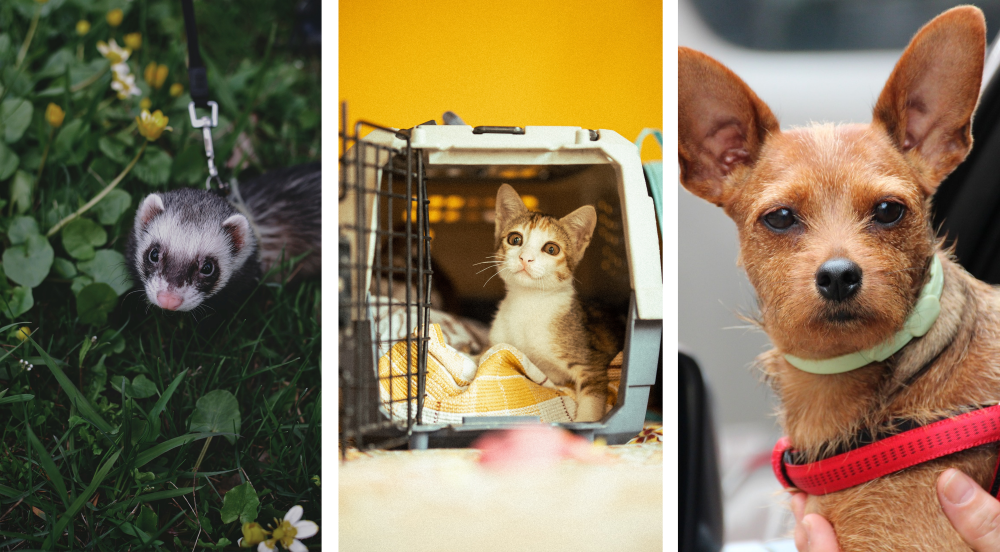
Ferrets, cats, dogs, and other mammals can carry rabies.
Bat Encounters
Knowing the facts about bats and rabies can help people protect themselves, their families, and their pets.
Brochure: What You Need to Know About Bats and Rabies
Flyer: Bats - When to Keep Them & When to Let Them Go
Data: Species and Location of Animals that Tested Positive for Rabies in Erie County (including bats)
How to Safely Capture A Bat
If professional help is not available, capture the bat safely as described below or watch this video on how to safely catch a bat. You will need leather or very thick work gloves (put them on), a small box or coffee can, a piece of cardboard, and tape.
- When the bat lands, move slowly toward it.
- While wearing gloves, put the box or coffee can over the bat.
- Then, slide the cardboard under the container to trap the bat inside.
- Tape the cardboard to the container, and punch small holes in the cardboard, allowing the bat to breathe.
Found a bat in your home?
If you find a bat in your house, DO NOT let the bat get outside. Call the ECDOH immediately at (716) 961-6800; after business hours call (716) 961-7898. Follow the steps below to capture the bat so that the ECDOH can test it for rabies.
Did you know?
- About 4% of all bats submitted for testing have rabies.
- Most of the recent human rabies cases in the United States have been spread by bats.
- Bats have small teeth that may leave marks that are not easy to see! Because of this, you should get medical advice even if you do not see bite marks when you wake up and find a bat in your room, or if you see a bat in the room of a child or near a mentally impaired or intoxicated person.
- Most bats leave in fall or winter to hibernate. These are the best times to "bat-proof" your home by sealing small openings and securing vents.
Contact
Division of Environmental Health
ECDOH Building
503 Kensington Avenue
Buffalo, NY 14214
Map of Campus
Phone: 716-961-6800 (For Emergencies after regular business hours: 716-961-7898)
Fax: 716-961-6880