 Erie County Dept of Health
Severe storms can bring heavy rain, strong winds, lightning, hail, and flooding. These events can happen with little warning and may lead to power outages, property damage, and injuries.
Being prepared and staying informed are the best ways to protect yourself, your family, pets, and your home.
If you or someone you know needs shelter, call 2-1-1.
Please share this information with people who may not see or understand these messages.
Be Prepared
Storms can happen any season.
- Make an emergency plan with your household.
- Practice what to do in case of a power outage or flood.
- Keep your emergency kit stocked.
Stay Informed
Stay up to date with real-time alerts and local forecasts:
- Check your local forecast.
- Use a reliable weather app.
- Sign up for emergency alerts.
Download the free Ready Erie App to receive notifications, locate emergency shelters, view up-to-date evacuation maps, create a personalized emergency preparedness plan and more.
Sign up for the City of Buffalo BUFFALERT System to receive emergency alerts and severe weather warnings that could directly impact you and your family.
Listen to commercial radio and television stations for the latest weather conditions.
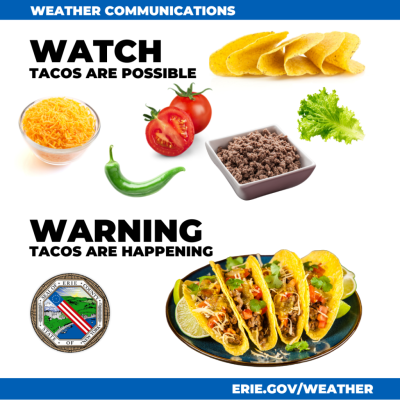 If a Severe Thunderstorm Watch or Warning is issued:
- Watch = Be prepared.
- Warning = Take action.
Power Outage Safety Tips
During severe storms, power outages may occur suddenly and last hours or days.
Before a Power Outage
- Keep flashlights, batteries, and a battery-powered radio around,
- Charge cell phones, power banks, and medical devices in advance.
- Discuss a power outage plan with your healthcare provider for any medical devices that require electricity and medications that need refrigeration.
- Stock up on nonperishable food, bottled water, medications, and basic supplies.
During a Power Outage
- Avoid opening refrigerators or freezers to keep food cold longer.
- Use flashlights rather than candles.
- Unplug electronics to prevent surge damage when power returns.
- Stay warm or cool using layers or shade. Do not use a gas stove or oven to heat your home.
- Listen for updates on a battery-powered radio or mobile device.
After Power is Restored
- Throw out perishable food if the fridge has been without power for more than 4 hours.
- Reconnect electronics slowly to avoid overloading circuits.
Health & Safety
Severe weather and outages increase health risks.
Prevent Carbon Monoxide (CO) Poisoning
- Never use generators, gas stoves, or charcoal grills indoors or in garages.
- Install carbon monoxide detectors in your home.
- If you feel dizzy, nauseated, or confused, get fresh air immediately and seek medical help.
Avoid Floodwater
- Never walk, drive, or swim through floodwater. Floodwater can contain debris, sewage, and toxins.
- Keep children and pets away from flood areas.
- See Flooding Safety
Food & Water Safety
- When in doubt, throw it out. Don’t eat food that may have spoiled or come in contact with floodwater.
- Use boiled or bottled water if your tap water becomes unsafe.
Emergency Storm Kit Checklist
Your kit should include:
- Flashlights & extra batteries
- Battery-powered radio
- Bottled water (1 gallon per person per day, 3-day supply)
- Non-perishable food (3-day supply)
- First aid kit
- Medications & copies of prescriptions
- Hygiene items
- Cash & important documents
- Cell phone chargers & backup batteries
- Pet supplies
Keep Pets Safe
- Bring pets indoors during storms.
- Include pet food, medications, and comfort items in your emergency kit.
- After the storm, watch for hazards like debris in your yard.
Check on Others
Help your neighbors especially older adults, people with disabilities, or families with small children. Make sure they have light, heat or cooling, and enough food, water, and medication.