 Erie County Dept of Health
What is Public Health?
Public health is about keeping people safe and healthy. Instead of waiting for people to get sick, public health works to stop problems related to safety, well-being and quality of life before they start. Public health helps everyone have a fair chance to live a healthy life, no matter where they live or who they are. People who work in public health make sure our community members have all the information they need to be healthy and make healthy choices.
This work includes focusing on topics like environmental health, vaccines, diseases, family planning, emergency response, and much more. Public health helps us all live longer and feel better.
One commonly used definition comes from 1920, where Charles-Edward Amory Winslow wrote that public health is the “science and art of preventing disease, prolonging life, and promoting health and efficiency through organized community effort".
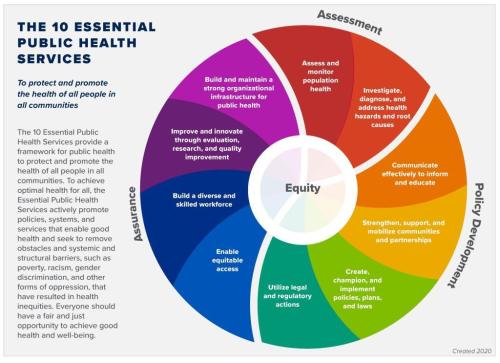
Public health uses the 10 Essential Servicesas a framework to protect and improve the health of the community.
Public Health Goals and Essential Services
- Assess and monitor population health.
- Investigate, diagnose and address health hazards and root causes.
- Communicate effectively to inform and educate.
- Strengthen, support and mobilize communities and partnerships.
- Create, champion and implement policies, plans and laws.
- Utilize legal and regulatory actions.
- Enable equitable access.
- Build a diverse and skilled workforce.
- Improve and innovate through evaluation, research and quality improvement.
- Build and maintain a strong organizational infrastructure for public health.
Why Public Health Matters
Public health protects people by focusing on prevention, education, access to care and producing policies that have a positive impact. It shapes the places we live, work and play by reducing illness and making sure resources are shared equitably. When public health systems are strong, fewer people get sick, and everyday life runs more smoothly.
What Public Health Does
Some examples of public health would be:
- Community Wellness: Helping people quit vaping or smoking and training people to use CPR
- Emergency Preparedness: Getting ready for storms or floods and sharing simple recipes for emergencies
- Family Planning/Sexual Health: Reducing gaps to birth control access and STI testing and treatment
- Health Equity: Working to reduce health disparities and understand where gaps are in the community
- Environmental Health: Teaching lead safe practices and checking that local restaurants are up to code
- Epidemiology: Collecting, analyzing and distributing data about chronic and communicable diseases, injuries and other health conditions
Public health looks at the bigger picture and is grounded in health equity practices to help the entire community thrive.
The Value of Public Health
Public health protects lives and saves money by preventing problems before they start. When people stay healthy, they avoid costly medical bills and reduce the need for expensive government spending on disease treatment. In fact, for every $1 invested in public health, the return can range from $4.10 to $27.20. A strong public health system helps people miss fewer days of work or school, spend less on healthcare, and enjoy healthier, more productive lives.
Social Determinants of Health (SDOH) and Equity
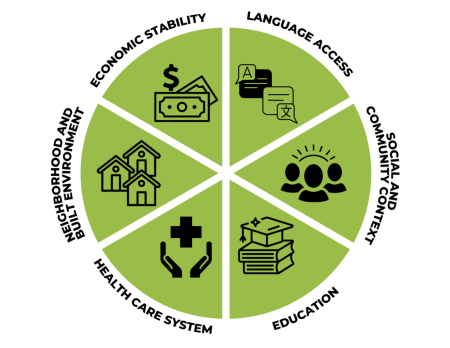 Natural and human-made environments impact our health. Health isn’t just about doctor visits and hospital stays. It’s about how we get to the doctor’s when we’re sick. And what’s making us ill. Do we have the knowledge to change our health? Can we find jobs to improve our access?
Public health examines and addresses social, economic, environmental and other structural issues with a goal of improving people’s quality and quantity of life. Social determinants of health (SDOH) include economic stability, language access, transportation, healthcare access, neighborhood and built environment, social and community context and education. These factors contribute to 50-80% of an individual's health outcomes.
The Erie County Department of Health’s Office of Health Equity has more information and local data on health equity and SDOH.