Environment & Planning
Planting Guidance
Contact 811 before you plant your tree to make sure there are no utility lines running near the planting site. This will protect you, your neighbors, and the environment! You can either call 811 or go to udigny.org.
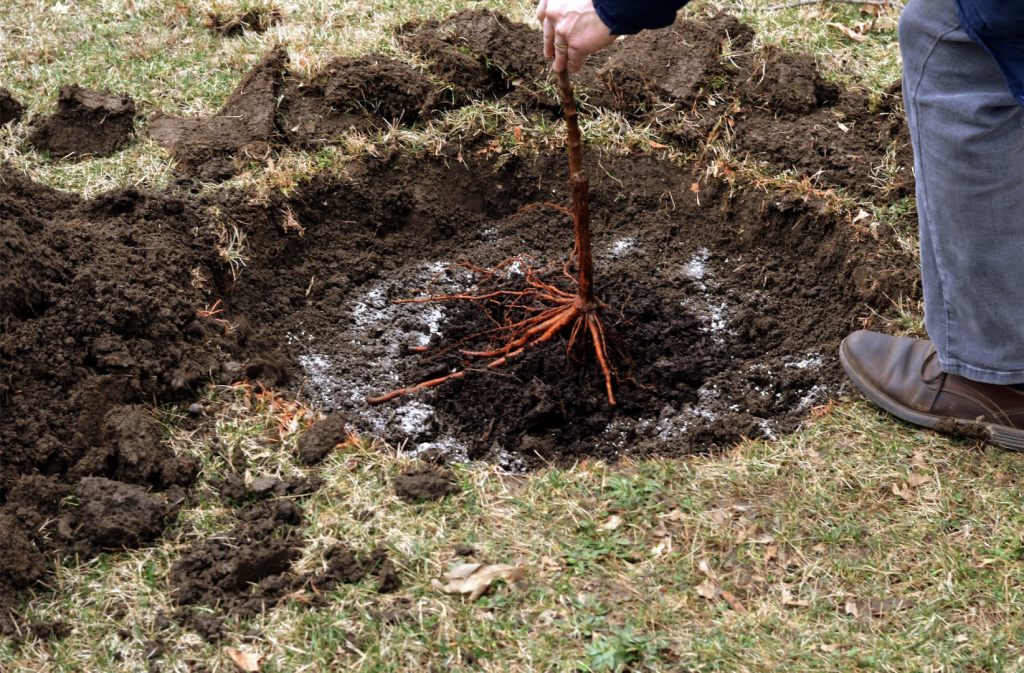
In addition to contacting 811, it is recommended that you conduct a planting site audit and investigate tree species before planting to ensure you are planting the right tree in the right place. For more information about right tree right place, check out the other information sections on this webpage.
Check out these guidance documents!
- Buffalo Niagara Waterkeeper has a guidance document on Planting Trees With Sod Removal
- Chapter 6 of the Tree Owner's Manual for the Northeastern US for a great tree planting resource:
- DEC Tree Planting Guide
- Arbor Day Container Tree Planting guide video
- Arbor Day Bare-Root Tree Planting guide video
- Buffalo Niagara Waterkeeper Tree Planting:
Native Tree Sources and Guides
Below are some resources and guides for native trees, including information where you can buy native trees.
Native tree guides:
- A list of native trees approved for Erie County can be found in the Parks Tree Planting Policy
- Buffalo Niagara Waterkeeper's Native Plant Guide
- City of Buffalo Tree Planting List, which includes trees that can thrive in urban landscapes
Tree Roots
It is important to consider the impact of tree roots on nearby infrastructure, such as sidewalks and pipes. The growth of tree roots per species cannot be guaranteed due to variable environmental conditions. However, Erie County can provide advice on what tree species might work best for your location.
There are trees that are better suited for urban planting that have less invasive roots that are less likely to impact your sidewalks, sewers*, foundations, and driveways. To learn more about trees with less invasive roots, visit a blog from the Davey Tree Expert Company.
To learn about types of tree root systems, visit a blog post from A Plus Tree Care & Sustainability.
* The intrusion of tree roots in sewer pipes is a risk, however, the tree roots will not break through sewer pipes. If there is a crack in the sewer pipe, even if it is a tiny crack, the tree root will likely grow into the sewer pipe in search for water.

Maintenance
- Tree Owner's Manual for the Northeastern and Midwestern United States
- ISA’s Best Management Practices — Tree Planting, Second Edition (2014)
- DEC's Maintenance Guide
- DEC's tree planting and maintenance calendar
You can support community tree maintenance by participating in volunteer programs like CommuniTree and the Tool Library's Service Days.
When spring comes around, to know if you tree is dead or dormant, visit a blog post by The Ontario Arborist to learn about five tests that you can run.
Watering Your Tree
The first 2 to 3 years of your tree's life is a critical period of establishment. During this period of establishment, it is important to stay on top of watering your tree by watering weekly. Once the tree is established, watering can be less consistent, such as watering every other week.
-
Water trees weekly from April through September, or until the ground freezes for evergreens, until the tree is established (2 to 3 years).
-
It is ideal to water your tree in the morning or evening, not during the hottest part of the day.
-
Check the soil moisture around your tree by using a garden trowel and inserting it into the ground to a depth of 2 inches. Move the blade of the trowel back and forth to create a small narrow trench, then use your finger to touch the soil. If it is moist to the touch, then they do not need water. If the soil is dry, the tree needs to be watered.
-
If you have metal fencing around your tree and it is hard to reach the soil close to the tree, you can still do this soil moisture test if you are within the root ball of the tree. There is negligible difference of the soil moisture between the the tree and a little bit further away from the tree.
-
-
Please note that there is a difference between moist and soggy. The soil should not be soggy.
-
Overwatering and underwatering result in a tree that is stressed, and therefore more prone to disease and infestation. Keeping the soil consistently moist is essential to healthy trees.
-
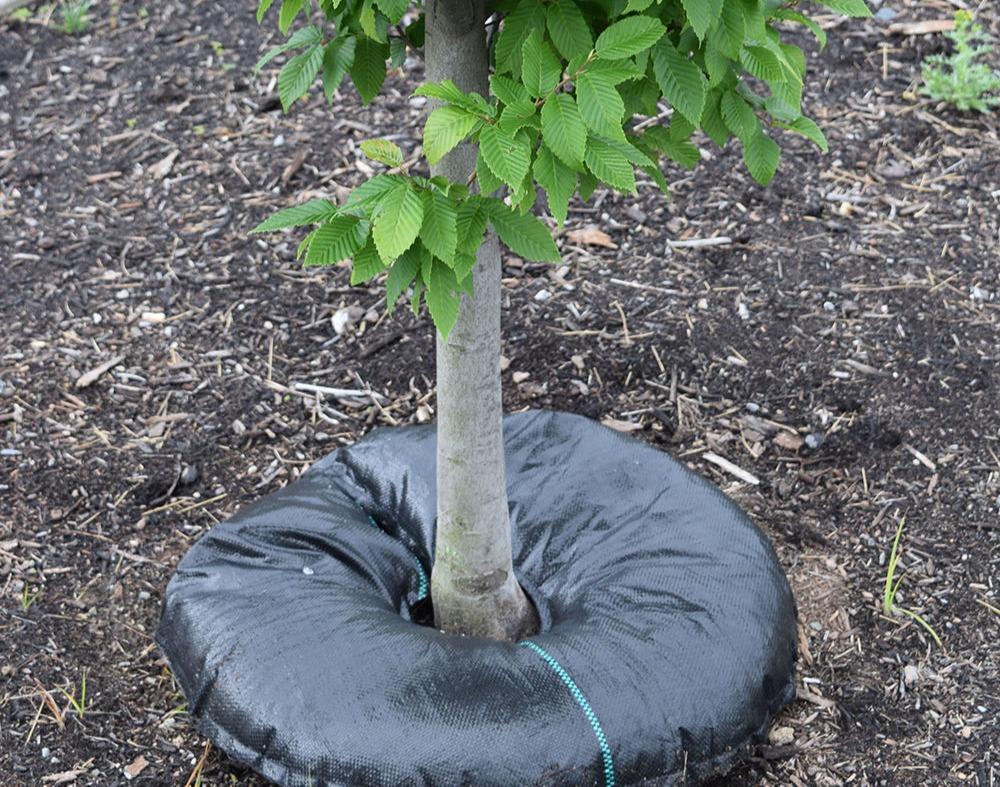
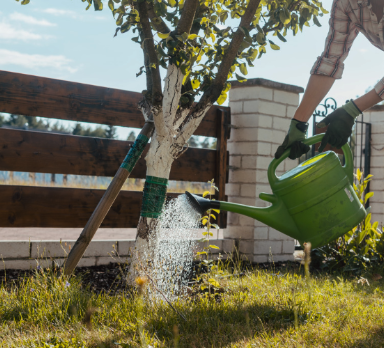
The preferred method to water your tree is through a drip system, which is done through a bag (e.g., tree diapers or gator bags) or a 5 gallon bucket with small holes where the water will slowly trickle into the soil. However, watering with a watering can or garden hose is just fine, just make sure to water a little bit at a time to make sure the water seeps into the soil to the roots.
-
Mulch is a great way to keep the soil from drying out quickly, especially during excessive heat. Applying mulch 2 to 3 inches deep of mulch will help conserve moisture and regulate the soil temperature. Do not mound the mulch up against the trunk (a mulch “volcano”), as this can encourage mold, fungal growth, and girdling roots.
Arbor Day Foundation How do I Know if my Trees Need Water video
Avoid Planting Invasive Trees
Invasive plants are introduced species that cause harm to the environment, economy, and/or human health.
Do NOT plant the following trees:
- Amur corktree (Phellodendron amurense)
- Autumn olive (Elaeagnus umbellata)
- Black locust (Robinia pseudoacacia)
- Callery pear (Pyrus calleryana)
- Gray florists willow (Salix atrocinerea)
- Japanese angelica tree (Aralia elata)
- Japanese tree lilac (Syringa reticulata)
- Norway maple (Acer platanoides)
- Sycamore maple (Acer pseudoplatanus)
- Tree of heaven (Ailanthus altissima)
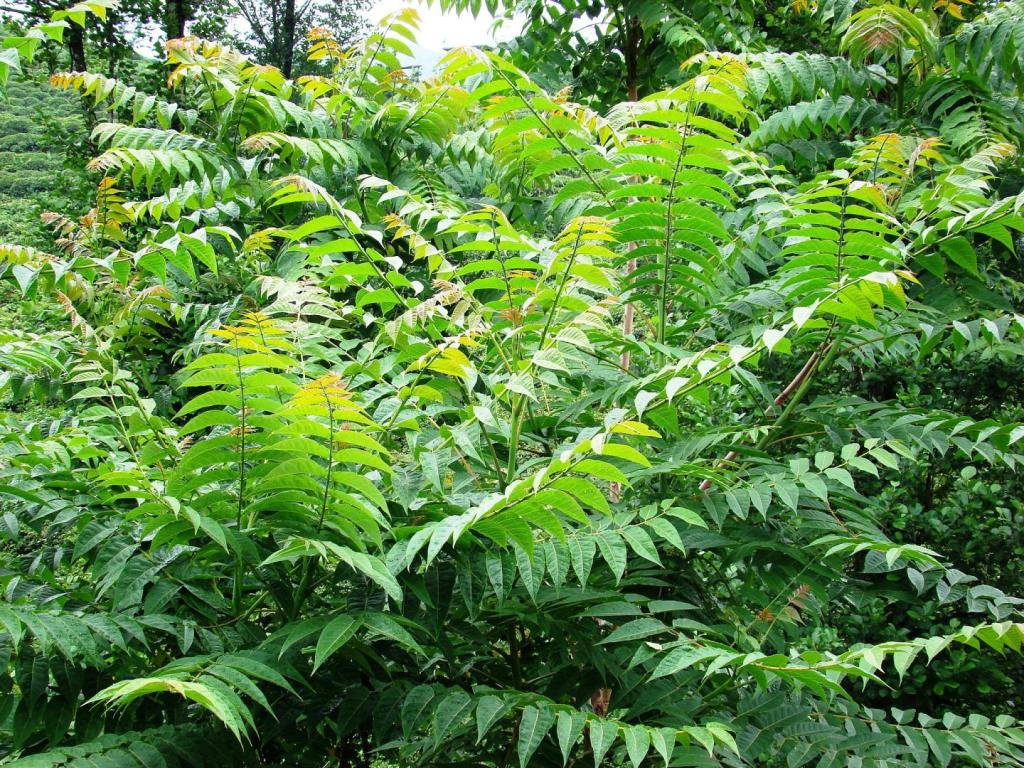
For more information about invasive species, check out resources at WNY Partnership for Regional Invasive Species Management.
Visit a New York State prohibited from sale list.
If you are interested in native trees that you can plant, check out page 7 of this native plants document from the DEC.
Soil Testing
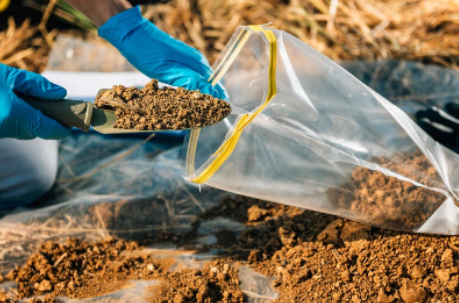
If you want your soil tested before planting a tree, you visit: Dairy One, Tractor Supply, or Cornell Cooperative Extension of Erie County. There also may be local free soil testing events that pop up, so keep an eye out for those!
Urban soils generally have a higher pH. If you’re interested in learning about a study that treated soil with a high pH, visit Cornell Cooperative Extension's article on testing soil pH.
If you want to know why your soil is acidic (low pH) or alkaline (high pH), it could be due to a variety of reasons.
- Acidic soil could be due to rainfall, leaching, organic matter decay, as well as other reasons. To learn more why soil is acidic, visit Oklahoma State University Extension's fact sheet on soil acidity.
- Alkaline soil could be due to weathering, coal-fired power plants, and/or irrigation with water that has a relatively high proportion of sodium bicarbonates and less calcium and magnesium, as well as other reasons. To learn more why soil is alkaline, visit this Wikipedia article on alkaline soil.
Street Tree Resources
You may be able to request a street tree to be planted at your property. Visit the available municipal forms within Erie County*:
- Buffalo
- Cheektowaga
- City of Tonawanda (towards the bottom of the webpage)
- East Aurora
- Orchard Park
- Springville
- Town of Tonawanda
- Village of Hamburg
- Village of Lancaster
- Williamsville
* If you do not see your municipality listed here, contact your city, town, or village clerk to see if you are able to request a street tree.
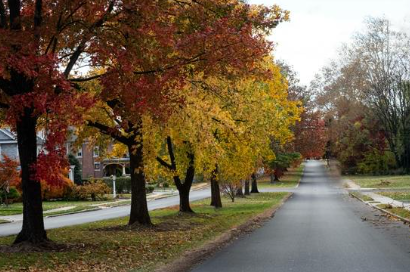
Selecting Tree Species Booklet
Check out our Selecting Tree Species booklet that will teach you about native trees in our region, all of which can be found in Erie County's nursery in Sardinia, NY.