 Erie County Dept of Health
Content on this page is adapted from the Erie County Office of Health Equity for our publication, "Let's Talk About Heart Health". None of the information on this page should be used as a substitute for direct medical advice from your health care provider.
This publication is available in six languages. You may order paper copies of this or any of our other publications, using this form. Printable PDF versions in all 6 languages are for download using the links below. For accessibility, please use the web version of this content.
Heart disease is a major health concern and is the leading cause of death in the United States and Erie County. Some people ignore heart disease symptoms and early warning signs. Untreated heart disease can lead to serious problems like heart attacks, strokes, and even death. Heart disease is serious, but can be managed with medical treatment and lifestyle changes. It is important to understand that you can maintain a good quality of life with proper heart health care.
NONE OF THE INFORMATION ON THIS PAGE SHOULD EVER BE USED AS A SUBSTITUTE FOR DIRECT MEDICAL ADVICE FROM A HEALTHCARE PROVIDER.
Why Heart Health Matters
Heart health impacts your whole body. Your heart is a strong muscle that pumps blood to every part of your body. Just like an engine makes a car go, the heart keeps your body running. Because your heart takes care of your whole body, taking care of your heart is very important for your overall health. Your heart health affects your overall health, but your overall health can also affect your heart health.
Noticing and treating health conditions can help protect your heart health. Talk to your doctor about any signs, symptoms, concerns, or changes to your health that you have noticed, such as chest pain, shortness of breath, or changes in weight. Some heart conditions like high blood pressure are hereditary, meaning they can be passed down from parents to their children through genes. It is important to tell your doctor about your family’s heart health history.
Taking Care of Your Heart
No matter your age or health status, you can take steps now to protect your heart. The foods you eat, how often you move your body, and how you manage stress can impact your heart health. Take care of your heart health by going to the doctor for regular checkups, getting medical care for health conditions like high blood pressure and high cholesterol, making healthier food choices, moving your body regularly, and choosing healthy ways to manage stress as much as possible.
Call a doctor if you have any of these symptoms
- Chest pain or discomfort
- Shortness of breath
- Swelling in your legs, ankles, or feet
- Irregular heartbeat or palpitations
- Dizziness, lightheadedness, or fainting
- Feeling unusually tired or weak
Heart Health Terms
Angina: Chest pain or discomfort that happens when the heart muscle doesn’t get enough oxygen-rich blood. It can feel like pressure or squeezing in the chest, and it often occurs during physical activity or stress.
Arrhythmia: When the heart beats too slowly, too fast, or in an irregular way. A fluttering or racing feeling in the chest.
Atrial Fibrillation: An irregular heartbeat that starts in your heart’s upper chambers. The most common arrhythmia.
Blood pressure: The pressure of blood pushing against the walls of your arteries. Blood pressure changes throughout the day and is affected by many things. What is “normal” is different for everyone.
Cardiac Arrest: When the heart suddenly and unexpectedly stops beating. Some people have chest pain before they become unconscious from cardiac arrest. However, you won't feel pain once you lose consciousness.
Cardiovascular Disease (CVD): A range of conditions that affect the heart and blood vessels.
Cholesterol: A waxy, fat-like substance in your blood that your body needs to stay healthy. Your body makes all the cholesterol you need, but we can get extra cholesterol from our food. There are 2 types, LDL and HDL. LDL is the “bad” kind that can build up in our arteries and cause a heart attack or stroke. HDL is the “good” kind. Having high levels of HDL can lower risk of heart disease and stroke.
Heart Attack: Occurs when a part of the heart muscle doesn't get enough blood. Also called a myocardial infarction. Feels like tightness, pressure or chest paint that sometimes spreads from the chest to the arms, jaw, neck or back. May include other symptoms.
Heart Disease: A range of conditions that affect the heart.
Heart Failure or Congestive Heart Failure: A serious condition when the heart cannot pump enough blood and oxygen to support other organs in your body.
Heart Murmur: Sounds — such as whooshing or swishing — made by abnormal blood flow through the heart valves.
Heart Palpitations: A feeling like your heart is missing heartbeats, racing, fluttering, or pounding.
Heart Rate: The number of times your heart beats in 1 minute. You can measure your heart rate by taking your pulse (feeling for the sensation of your heartbeat and counting the number of beats).
Heart Valve Problems: One or more of the valves in your heart doesn't work properly. Stenosis is stiffening or narrowing. Regurgitation occurs when a valve won’t close completely. Atresia is when a valve is closed off.
Hypertension: High blood pressure or blood pressure that is higher than normal.
Hypotension: Low blood pressure or blood pressure that is much lower than normal.
Myocarditis: Inflammation (swelling) of the heart muscle.
Stroke: A brain attack that occurs when blood supply to the brain is blocked (called ischemic) or a blood vessel in the brain bursts (hemorrhagic). Feels like a sudden onset of a variety of symptoms including confusion, vision problems, loss of balance, and more. Some people may also experience a transient ischemic attack or TIA which is considered a ministroke or a warning sign that a more severe stroke is possible.
Triglycerides: A type of fat in your blood your body uses for energy.
Signs and Symptoms
Signs are normally visible or can be measured. Symptoms are conditions you may feel or notice but that others might not see. It is important to share all signs and symptoms you have noticed with your medical provider. Remember, everyone is unique. Signs of good health for you may be different from your loved ones and people you know. Your overall health may also be impacted by medications, health conditions and family history. Talk to your medical provider to learn more about your unique signs and symptoms.
Low blood pressure, or hypotension, can cause dizziness and fainting. Staying hydrated and eating a balanced diet can help manage low blood pressure.
Common signs and symptoms include:
- Dizziness
- Fainting
- Blurred Vision
- Nausea
High blood pressure, or hypertension, can lead to serious heart issues like heart disease and stroke. It is important to monitor your blood pressure regularly, make healthier food choices, and move your body when possible.
Common signs and symptoms include:
- Irregular heartbeat
- Chest pain
- Shortness of breath
- Severe headaches
- Vision problems
- Fatigue
- Confusion
Checking your blood pressure
High blood pressure usually has no warning signs, and many people do not know they have it. Regularly checking your blood pressure is the only way to know if you have high blood pressure. Talk with your doctor about when and how often to check your blood pressure. You can get your blood pressure checked at your doctor’s office and you can check it yourself. A blood pressure cuff may be covered by your insurance plan. You can also buy one to use at home or take your blood pressure for free at pharmacies, grocery stores, and community centers. Track your blood pressure using a smartphone wellness app or a blood pressure tracking card.
Find a blood pressure tracking card here: English: on.nyc.gov/3VSXDSq Spanish: bit.ly/3DyzgDh
Common Signs of a Heart Health Problem
New or continuing:
- Chest pain or discomfort
- Shortness of breath
- Swelling in your legs, ankles, or feet
- Irregular heartbeat or palpitations
- Dizziness, lightheadedness, or fainting
- Feeling unusually tired or weak
You Know Your Body Best
Tell your doctor if you think something is wrong.
If you do not think your doctor is listening to you when you share signs and symptoms, tell your doctor that you feel this way. If they still will not listen, you may need to find a new doctor. If you feel as though you are being treated unfairly, report your doctor to your health insurance provider.
Understanding Your Numbers
What is considered a “normal” range can vary depending on each person and their circumstances. Age, gender, medications, weight, exercise capability, stress, current health status, and the environment where the measurement was taken can all impact a person’s “normal” range of vital signs. Ask your health care provider to find out what your “normal” ranges are for pulse, blood pressure, cholesterol, and triglycerides.
Heart Rate (after resting): Also called pulse. This is the number of times your heart beats per minute (BPM).

Check Your Pulse: Place two fingers on your wrist below your thumb, pressing lightly. Count the beats for 30 seconds. Then double that number to get your pulse rate.
Blood Pressure (after resting): Your blood pressure is read as a top whole number "over" a bottom whole number- for example, "110 over 70." The top number is called systolic blood pressure. The bottom number is called diastolic blood pressure.
Note: Your blood pressure depends on many factors including lifestyle; medications such as mental health medicine, birth control, or steroids; medical conditions such as diabetes and sleep apnea; family history; your emotions; and stressors such as income, employment status, neighborhood conditions, personal relationships, and more. Take your blood pressure regularly. Talk with your doctor about what a normal range is for you.

Cholesterol (after not eating food for 8-10 hours): Cholesterol is shown as three whole numbers with a unit of measure (mg/dL). "HDL" and "LDL" are two different types of cholesterol tested in a cholesterol test, also called a lipid panel.
Note: Some sources will show separate cholesterol levels for men and women. It is important to understand that this difference is related to the level of the hormone estrogen found in your body. Each of us is unique and our estrogen level may not relate to our gender. Your level of estrogen can be impacted by pregnancy, menopause, medication and more. Family history and lifestyle also play a role in your cholesterol. Talk with your doctors about what range that is right for you.

Triglycerides (after not eating food for 8-10 hours): Triglycerides are shown as a whole number with a unit of measure (mg/dL) in a cholesterol test, also called a lipid panel.

Testing
Blood Pressure Cuff or Monitor: A portable device that measures blood pressure. It consists of an inflatable cuff and a measuring unit.
Cardiac Catheterization: Checks the inside of your arteries for blockage by inserting a thin, flexible tube through an artery in the groin, arm, or neck to reach the heart.
Cardiac CT Scan: Uses x-rays to provide detailed pictures of your heart and blood vessels.
Cardiac MRI: Uses radio waves and a large magnet to create detailed images of the heart and blood vessels.
Chest X-ray: Uses x-rays to create a picture of the heart, lungs, and other organs in the chest.
Cholesterol Test or Lipid Panel: A blood sample taken from your arm measures the amount of fat or cholesterol in your blood, including your levels of LDL or “bad” cholesterol, HDL or “good” cholesterol, and triglycerides.
Coronary Angiogram: Uses dye inside your body and x-rays to look at your heart's blood vessels, called coronary arteries.
Echocardiogram: Uses ultrasound (special sound wave) to create a picture of your heart. Also called a cardiac ultrasound.
Electrocardiogram (EKG or ECG): Measures the electrical activity, heart rate, and how regular your heartbeat is using electrodes (small, plastic patches) that are placed on your chest.
Holter Monitor: A portable ECG device that is worn for a day or more to record the heart’s activity.
Stress Test: Measures your heart rate while you walk on a treadmill. This helps to determine how well your heart is working when it has to pump more blood.
Emergencies
When there is a heart-related emergency, every minute matters. Whether you suspect it’s cardiac arrest, a heart attack, or a stroke, the first step is always to call 911 right away.
| Heart Attack Signs | What you can do for a Heart Attack |
|
|
| Cardiac Arrest Signs | What you can do for Cardiac Arrest |
|
|
| Stroke Signs | What you can do for a Stroke |
|
|
Managing Heart Health
How you manage heart health conditions depends on the cause and type of heart disease or damage. Strategies may include lifestyle changes to build heart-healthy habits, medicines, and heart surgery or other procedures.
Lifestyle Changes
Making changes to your everyday habits can help improve your heart health. Protect your heart health by making as many healthy food choices as possible, moving your body regularly, and choosing healthy ways to manage stress whenever you can. 1. 2. 3. Choose heart healthy foods: Look for affordable options like beans, lentils, and frozen vegetables. Move your body: Try walking, dancing, stretching, cleaning, or gardening. Manage stress: Practice deep breathing, listen to music, or find a quiet moment to relax. Choose healthy coping mechanisms like meditation, journaling, talking to a trusted friend, or engaging in hobbies.
Medication Management
There are many prescription medications that can help manage heart health. Before starting a new prescription, discuss with your doctor any potential side effects or interactions with other medications. Remember to regularly renew your prescription to stay on track. Discuss options with your doctor and inform them if your treatment is not working. Some foods, even healthy ones, can cause unintended and possibly dangerous interactions with certain heart medications. It can be dangerous to miss even one dose of heart medication.
Common medications include:
- ACE inhibitors like lisinopril (Zestril) help lower blood pressure by widening your blood vessels.
- Anticoagulants or “blood thinners” like warfarin (Coumadin) help reduce the risk of blood clots in your blood vessels by decreasing your blood’s ability to form clots.
- Aspirin, clopidogrel (Plavix), and other antiplatelet agents keep blood clots from forming by preventing the platelets in your blood from sticking together.
- Beta blockers like metoprolol (Lopressor, Toprol XL) make your heart beat more slowly and with less force to lower blood pressure.
- Statins like atorvastatin (Lipitor) or rosuvastatin (Crestor) lower LDL cholesterol by reducing the amount of cholesterol your liver makes and helping your liver remove cholesterol from your blood.
CARRY A LIST OF ALL OF YOUR MEDICATIONS WITH YOU AT ALL TIMES.
Ask your doctor for a medicine wallet card or a printout from your patient portal.
Chronic disease self-management programs (CDSMPs) help people learn new skills, gain confidence, and get support with managing chronic health conditions like heart disease. Everyone can learn something from CDSMPs, even if they have cared for someone with a chronic health condition or lived with heart disease for many years. Ask your doctor for a referral to attend a chronic disease self management program in your area. Many health care providers offer a course from the doctor’s office. People with health insurance may also have access to dieticians and medically-tailored meals.
Heart surgeries and procedures can help to maintain and prolong life. Heart surgery may be done in an emergency situation, such as a heart attack. Your doctor may also recommend surgery after other strategies no longer work. Talk with your doctor about your options, including risks and benefits.
Cardiac rehabilitation is a program that helps you recover after heart problems or surgery. It includes exercise, learning about healthy habits, and support to stay strong and prevent more heart issues. The goal is to help you feel better and take care of your heart
What You Eat Matters
Eating too much sodium (salt) can increase your blood pressure and the risk of heart disease and stroke. Sodium is more than table salt. Most sodium in our diets comes from packaged and restaurant food. Even foods that may not taste salty can be major sources of sodium. Foods with only medium amounts of sodium, like bread, can become major sources of sodium because they are eaten so often. Try swapping out white rice, bread and pasta for brown rice and whole grain options. Use herbs and spices to boost flavor instead of table salt. Taste food before adding additional salt. Ask about low sodium options at restaurants.
Eating healthy can get expensive! Save money on groceries by buying frozen foods. Canned beans and vegetables can save lots of time in the kitchen. Remember to drain and rinse canned beans and vegetables to get rid of added salt or choose “low sodium” or “no salt added” options. To learn more about accessing healthy foods on a budget, visit erie.gov/health-equity.
DASH Eating Plan
The Dietary Approaches to Stop Hypertension (DASH) eating plan is a simple, heart-healthy diet that can help prevent or lower high blood pressure. The DASH eating plan recommends:
- Eating vegetables, fruits, and whole grains Including fat-free or low-fat dairy products, fish, poultry, beans, nuts, and vegetable oils
- Limiting foods that are high in saturated fat, such as fatty meats, full-fat dairy products, and tropical oils such as coconut and palm oils
- Limiting sugary drinks and sweets
For more information and to download a reminder card to hang at home, visit: bit.ly/DASHplan
Understanding Food Labels
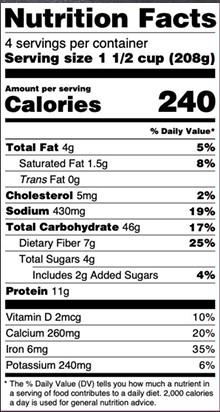
Understanding the Nutrition Facts label on packaged and processed food items can help you make good choices, especially when snacking. No food is a bad food but many foods should be eaten in moderation (only sometimes). For managing heart health, pay attention to:
- Serving size: Does not always mean the amount you should eat! This is a simple way to measure the nutrition in the amount you did eat. For example, the sample nutrition facts label shows 1 1/2 cups as a serving size, so if you ate 3 cups, you know you need to double all of the info listed. There are four servings in the package, so if you ate the whole package, multiply everything by 4.
- % Daily Value (%DV): Daily Values are the recommended amounts of nutrients to consume or not to exceed each day. The % Daily Value is how much of a nutrient is in a single serving of the food you are eating.
- Saturated Fat and Trans Fat: Saturated fats and trans fats can increase your LDL (“bad”) cholesterol. For heart health, focus on the amount of saturated and trans fats in the food you are eat rather than the amount of total fats.
- Sodium: The amount of salt in the food you are eating. Even foods that may not taste salty can contain large amounts of sodium.
- Added Sugars: Sugars in the food you are eating can be naturally occurring or added. “Added Sugars” means in addition to the sugars already naturally occurring in the main ingredients. Almost all foods, including fruit, have some amount of sugar. Not all foods have added sugar.
LEARN HOW TO READ A FOOD LABEL Visit: bit.ly/HeartFoodLabel
COVID-19 and Heart Health
A severe or even mild COVID-19 infection can affect your heart health. Many people who are hospitalized with COVID-19 have underlying heart issues. People with cardiovascular disease are more likely to experience a severe, potentially life-threatening reaction to a COVID-19 infection.
If you have a heart health condition, you can take steps to protect yourself. Consider wearing a mask in crowded public places, and speak with your doctor about the COVID-19 vaccine. Take your medications and follow your treatment plan to manage chronic health conditions.
Choosing a Doctor?
Choosing a primary care doctor can be difficult. Some things to consider when choosing a doctor:
- Find out which doctors are “in-network,” meaning they work with your insurance plan.
- Find a doctor with skills that meet your health needs. Some primary care doctors specialize in internal medicine, meaning they focus on prevention and treatment of conditions such as heart disease.
- Look for a doctor’s office with hours and locations that meet your schedule and travel needs. Some offices have evening and even weekend hours.
- Find a doctor you can trust. Trust yourself when you feel as though you are not being listened to. Changing doctors can be stressful but it is important to have a doctor who you can trust and who listens to you.
Find affordable primary care, behavioral health and dental care at a health care center near you: snapcapwny.org/#safety
Health Insurance
Medicare, Medicaid and most private insurance plans pay for some supplies like blood pressure monitors.
- Ask your health care team for help finding low-cost or free supplies.
- Ask your employer about health insurance benefits
- Call 211 WNY by dialing “211” or texting your ZIP code to 898211
- Visit nystateofhealth.ny.gov
TIP: Search for “Assistors” on NY State of Health to find FREE help exploring and enrolling in health insurance, including Child Health Plus. Assistance is available in multiple languages and on evenings and weekends.