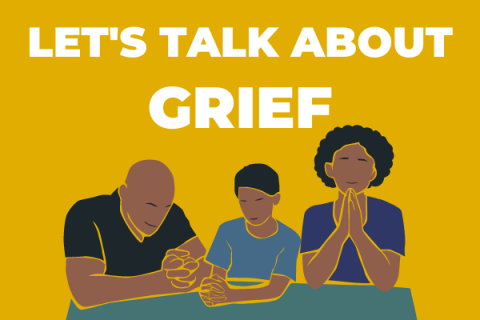
Let's Talk About Grief

Illustration of a family of 3 gathered with heads bowed and hands clasped

Content on this page was developed by the Erie County Office of Health Equity for our publication “Let’s Talk About Grief.” This publication is available in six languages. You may order paper copies of this or any of our other publications, using this form. Printable PDF versions in all 6 languages are for download using the links below. For accessibility, please use the web version of this content.

Are you in crisis? Call Crisis Services 716-834-3131 or dial 988 for help now.

When you are grieving a loss or have experienced a traumatic event, feeling shock and anger is normal. The healing process starts when you are ready to begin. Adopting a few new habits can help you find balance. The goal is not to get over it, but to get through it.

Grief Can Be ________

Our response to loss is not just emotional. Grief can take on many forms and can change over time. Any of these responses are considered natural and normal for those who are grieving.

Emotional

  • Shock
  • Disbelief
  • Anger
  • Fear
  • Sadness
  • Powerlessness
  • Hopelessness
  • Relief
  • Shame
  • Guilt
  • Panic
  • Loneliness
  • Emptiness
  • Numbness

Psychological

  • Lack of concentration
  • Explosive emotions
  • Lack of interest in previous activities
  • Lack of confidence
  • Not able to feel joy
  • Extended retreat
  • Intrusive thoughts

Physical

  • No energy
  • Trouble sleeping
  • Sleeping too much
  • No appetite
  • Overeating
  • Shaking
  • Headaches
  • Shortness of breath
  • Lump in the throat
  • Muscle loss
  • Stomach pain
  • Tightness in chest

Spiritual

  • Doubts about belief system
  • Looking for meaning
    New priorities
  • Interest in afterlife
  • Belief that person is in a better place

Family Time

Whether it's the one you were born with or the one you choose, family is important when you experience loss.

You may feel alone or misunderstood. With nowhere else to turn, you may think – well at least I have my family. Family is supposed to be there for each other, but trauma can make people act differently. Even if you’ve experienced the same thing, one person’s reactions may be very different from yours.

If your loved ones start to grieve differently than you, remember the significant roots of your connection. Try to give everyone enough space to express feelings, vent or just be together. Recognize and validate each person’s way of grieving together or alone. You'll find balance with time.

More info from National Child Traumatic Stress Network Resources.

Power in Parenting

How to help a child after a parent or caregiver dies

  • Facing new fears. Let them know you are willing to listen to what’s on their mind.
  • Taking care of you. The more you take care of yourself, the better equipped you are to take care of them.
  • Hold onto the old and embrace the new. Structure and stability help kids feel secure. 
  • Keeping a routine will provide a safety net. Create comforting connections. Find new ways to honor your loved one with kids in mind. 
  • Build new traditions over time. Seek support. Gather support from friends, programs and professionals to step in while you find balance.

For more info, visit the National Child Traumatic Stress Network.

Coping With Trauma

You can’t pour from an empty cup. Taking care of yourself is an important way to begin healing and to be there for others.

  • Connect. Find a role model, mentor or group of people who understand what you experience. Making a connection can be a powerful part of coping. Peer interaction is a very effective way to work through your feelings. 
  • Recognize. Acknowledge that your experiences and feelings are a normal reaction to trauma. There are no good or bad or right or wrong feelings. Denying or ignoring your painful feelings only delays your healing. 
  • Name. When you’re able to name something that is hurting you, it loses its power to cause you fear and harm. Naming your experience and your feelings can be empowering. Experience. Pay attention to what each emotion feels like in your mind and in your body. Give yourself permission to confront each feeling.
  • Express. Find constructive ways of working through tough emotions. You may find a different way of expressing each feeling you recognize. Taking action has cleansing effect and the intensity of your feelings will diminish.
  • Pause. Remind yourself that taking time to yourself can improve your health. Rest is a radical act of self-care. Identify. Know your specific triggers and think about how to cope with them. Role-playing your reaction will help you with anxiety and supports processing trauma.
  • Contribute. Consider getting involved in community care and healing circles. This can provide a sense of control, boost confidence, and contribute to the healing in others. This can also help connect you to others who can validate and support your path to healing.

Not Sure if You Need Support?

Read feedback from real people who called for help after a loss.

Week by week, I was slowly falling apart. I think I knew that I needed help, but I wasn't sure what that looked like until I called.

I needed someone unbiased that wouldn’t just say “You ’re going to be fine.” For the first time in my life, I found someone who was willing to just listen to me.

My grief felt like physical pain and I felt paralyzed. Once I got help, I got better at understanding my grief and what to do when the pain comes.

Resources

For a bigger list of mental health resources in Erie County and beyond, see our Mental Health Allies in Erie County page. We also recommend our publication Let's Talk About Mental Health.

Crisis Services

National Suicide Prevention and Crisis Lifeline: Dial 988

Crisis Services 24-hour hotline: 716-834-3131

Crisis Text Line: 741741. Free 24-hour text message support.

Erie County Warmline Non-crisis calls: 716-248-2941

Erie County Warmline Text: 716-392-2221

NY Project Hope Emotional Support Helpline: 1-844-863-9314 [8am-10pm]

24-Hour Addiction Hotline: 716-831-7007

Veteran Crisis Hotline: 1-800-273-8255 choose option 1.

Crisis Services for Youth and Families

Spectrum C.A.R.E.S. (Crisis And Re-Stabilization Emergency Services) Team: 716-882-4357

Kids Helpline: 716-834-1144

BestSelf Child Advocacy Center: 716-886-5437

Grief & Trauma Support

BestSelf Behavioral Health Services: 716-884-0888

Endeavor Health Services: 716-895-6700

Spectrum Health & Human Services 24-Hour Line: 716- 710-5172

Horizon Health Services: 716-831-1800

ECMC Help Center (Immediate mental health support daily): 716-898-1594
Virtual visit hours: M-F 8am-9:30pm
Walk-in hours: M-F 8am-10:30pm

Grief & Trauma Services for Youth and Families

Child & Family Services: 716-842-2750 

Family Help Center 24 Hour Helpline: 716-892-2172 

Haven House 24-Hour Hotline: 716-884-6000 

Jewish Family Services: 716-883-1914

Students are encouraged to connect with school counselors for support.

Victim Support Services

New York State Office of Victim Services: 1-800-247-8035 

ECMC BRAVE (Buffalo Rising Against Violence): 716-898-6461

Erie County District Attorney: 716-858-2400 [leave a voicemail]

Center for Elder Law & Justice: 716- 853-3087

Neighborhood Legal Services: 716- 847-0650

Community Services for Every1: 716-883-8002

Other Support 

NY Connects: 716-858-8526
Support services for older adults

Erie County Restorative Justice Coalition: 716-810-1038

GLYS: Growing LGBTQ+ Youth Support: 716-855-0221
Virtual & in-person drop-in centers

Buffalo Peacemakers: 716-912-7188

Changed