 Erie County Dept of Health
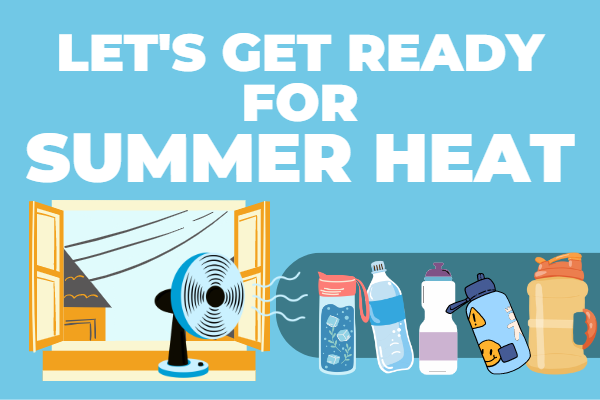
Printable Versions of "Let's Get Ready for Summer Heat"
Why Should We Prepare?
Summers in Erie County are getting hotter. The number of days it is warmer than 90°F (32°C) increases each year. Rising summer temperatures can impact our health. Sun and heat can make working and playing outside uncomfortable and unsafe. Planning for hot weather will keep you cool, safe and healthy this summer.
Hot summer weather can cause health problems called heat illnesses. Heat illness can include heat cramps, heat exhaustion and heat stroke. Everyone can be affected by heat illness. Some people are more likely to be affected by heat, including:
- babies and young children
- older adults and elders
- people dependent on others for care
- people who live alone
- those with health conditions like high blood pressure
- people who work or live outside
- people who are pregnant
- those who live in upper-level apartments
- people who don't have air conditioning
- those who take antihistamines, antipsychotics, beta-blockers (heart medicine) and diuretics (water pills)
Pets are susceptible to heat illness, too.
Prevent Heat Emergencies
Here are some tips to help you stay cool and safe:
- LOOK at the weather report. Pay attention to when the hottest part of the day will be and plan around it.
- DRINK more water than usual. Do not wait until you feel thirsty to drink.
- WEAR loose, lightweight, light-colored clothing. Cotton and linen are best.
- FIND shade where you can. Bring a hat or umbrella.
- STAY in air-conditioned buildings as much as possible. Look for cooling centers in your area.
- AVOID using your oven or stove to cook.
- EAT hydrating foods like melon and cucumber.
- TAKE cool showers or baths.
- TAKE breaks when working or playing outside.
- AVOID or limit intense physical activity.
- CHECK on your loved ones, neighbors and anyone who lives alone.
- KNOW the early signs of heat illness.
- DO NOT WAIT for a heat cramp to start cooling down. Stay cool from the beginning.
All heat emergencies are preventable!
Your Health and Heat
Heat-Related Illnesses
Everyone manages heat differently. Chronic health conditions, medications and stress can make it difficult to stay cool in hot weather. Learn more about heat-related illnesses below.
- Heat Rash. Skin irritation caused by heat and sweat. Symptoms include painful bumps or a red rash on the skin. Keep the rash area dry to soothe.
- Heat Cramps. Caused by loss of salt and moisture in the body, usually due to extra sweat. Cramps feel like pain or spasm in a muscle. Drink liquids and massage gently to relieve pain.
- Dehydration. When your body uses or loses more fluids than you take in. Signs and symptoms include dry mouth, dizziness, extreme thirst and fainting. Can be reversed by drinking more fluids.
- Heat Exhaustion. Weakness due to serious dehydration. Signs and symptoms: heavy sweating, headache, clammy skin and nausea. Rest, drink water and seek medical care if symptoms continue.
- Heat Stroke. Serious illness due to high body temperature. Signs and symptoms include fast heart rate, hot skin, confusion, slurred speech, irrational behavior and fainting. Any of the above illnesses may also occur. Call 911 for emergency medical care. Move the person to shade, hydrate (if alert) and cool with wet cloths.
- Overexertion. Easy does it! Extra strain on your body due to physical activity during hot weather can lead to exhaustion and heat stroke. Plan to take breaks.
First Aid
- If you think someone is suffering from heat illness:
- Call 911 for emergency care if the person is not alert or if lips and fingernails are blue.
- Move the person to rest in a shaded place and fan them to cool down.
- Hydrate with a cool drink if they are alert enough to drink safely.
- Apply cool, wet cloths to the skin or soak clothing in cool water.
- Focus on the back of the neck, wrists and forehead.
- Massage muscles gently for muscle cramps.
- Seek medical care if any symptoms persist.
When it is hot, drink!
- Do not wait for signs of heat illness to take steps to stay cool and hydrated. Prevent heat illness by preparing for the weather each day.
- Do not leave children in hot cars. When it is 75°F outside, it is at least 105°F inside a car.
- Avoid alcohol AND caffeine. These substances make it hard to cool down. They can also cause dehydration.
- Do not use rubbing alcohol on skin. It can cause an increase in body temperature.
- Know the side effects of medications you take. Heat may impact how you feel.
- Do not use medicines used to treat fever, such as aspirin, acetaminophen or NSAIDS. These medications do not work on high body temperatures due to heat stroke
See Your Pee
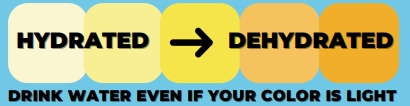
The color of your urine mixed in toilet water can tell you how hydrated you are. Keep track of the color throughout the day and keep drinking water, even when you are hydrated.
Keep Cool in Your Community
We are all in this together.
- When it is hot, take extra care to check on loved ones, neighbors and elders.
- Invite your neighbors to walk around the mall.
- Meet with friends at a splash pad.
- Spend an afternoon at an Erie County library.
- Ride an air conditioned NFTA bus to see a friend.
- All Erie County parks have shelters with shade cover. Trees offer lots of shade, too.
- Have a picnic!
- Bring foods that hydrate and cool your body: melon, apples, tomatoes, celery, beans & lentils, cherries, grapes, pears, mangoes, lettuce, fennel, radish greens, berries, cardamom.
Weather Watch
Erie County HEAP Cooling Assistance
Did you know? The Erie County Home Energy Assistance Program (HEAP) offers cooling assistance to eligible residents. You can receive up to $800 to buy and install an air conditioning unit in your home or apartment.
- The HEAP application opens up in May of each year.
- The HEAP application closes when funds run out.
Check eligibility today!
Call to apply: 716-858-7644
Apply in person: 460 Main St, Buffalo NY 14202