 Erie County Dept of Health
The National Diabetes Statistics Report says that more than 1 in 3 Americans have prediabetes. Of those with prediabetes, more than 80% do not know they have it. Treating prediabetes can protect you from type 2 diabetes. Type 2 diabetes and complications from any type of diabetes are preventable. About 1 in 5 adults in Erie County have been told by their doctor that they have prediabetes, type 1 diabetes or type 2 diabetes. Diabetes is common but it can be treated. If left untreated, diabetes can cause other health problems. It is important to know you can live well with diabetes.
What is Diabetes?
Diabetes is a chronic or long-lasting health problem that affects how your body uses food for energy. Your body breaks down most of the food you eat into glucose, or blood sugar, and releases it into the bloodstream. Glucose is an important source of energy and helps deliver nutrients to the body's organs, muscles and nervous system. Insulin is a chemical your body produces that turns blood sugar into energy. When you have diabetes, your body does not make enough insulin or does not use it as well as it should. Without insulin, too much blood sugar stays in your bloodstream and causes you to feel unwell. Over time, too much sugar in your bloodstream can cause serious health problems, such as heart disease and kidney disease.
There are three main types of diabetes: type 1, type 2 and gestational diabetes. There is no cure for diabetes but there are things you can do to help manage symptoms and stay well.
Living Well With Diabetes
People living with diabetes can manage their blood sugar by eating regular meals, staying active, checking blood sugar and taking extra care of their physical and mental health. Some people with diabetes may need to take oral medication or inject insulin to maintain safe blood sugar levels. Staying in your target range of blood sugar levels can improve your energy and mood. Taking charge of your overall wellbeing is important to preventing diabetes and other health problems related to diabetes.
Common health problems related to diabetes include heart disease, kidney disease, nerve damage, and other problems with blood flow to the legs and feet, oral health, vision, hearing, and mental health. Some people with diabetes will lose fingers, toes or feet due to poor blood flow. This is not normal and can be prevented.
Find tips for choosing a healthcare provider.
It is Going to Be Okay
You are more than your diagnosis!
Getting a prediabetes or diabetes diagnosis can be overwhelming or upsetting. It is important to know that even if you have seen family members and friends suffer from diabetes complications, you can live well with diabetes.
Getting a diagnosis can also be an opportunity. A diagnosis from your doctor means you have access to treatment. Ask your doctor for more information about what services are available to you and explore all of the resources and programs.
After your diagnosis, do your best to take care of your body and mind by taking things one day at a time and making small changes, one by one.
Diabetes Types & Terms
- Type 1 Diabetes: A chronic condition where the pancreas does not make any or makes very little insulin. The cause is not known and it is not preventable. Type 1 diabetes is treated with daily insulin injections and continuous glucose monitoring. Type 1 diabetes is often found when you are young but can happen at any age.
- Prediabetes: A serious health condition where blood sugar levels are higher than normal, but not high enough to be diagnosed as type 2 diabetes. Prediabetes affects 1 in 3 Americans. More than 80% of people with prediabetes do not know they have it. Treating prediabetes can protect you from type 2 diabetes.
- Type 2 Diabetes: Condition where the body does not respond normally to insulin. This is called insulin resistance. The pancreas makes extra insulin to try to get cells to respond. Eventually the pancreas cannot keep up, and blood sugar rises, becoming prediabetes and then type 2 diabetes. These high amounts of blood sugar can cause serious damage to the body.
- Type 2 diabetes is treated with lifestyle changes and medication. This condition is typically found in adults over 45 but can happen at any age
- Gestational 2 Diabetes: Occurs when your body cannot make enough insulin during pregnancy. This is treated with blood sugar monitoring, lifestyle changes and medication. People with prediabetes are at a higher risk, but anyone who is pregnant can experience gestational diabetes.
- Pregnant people are typically offered a glucose tolerance test around 24 weeks of pregnancy. Blood sugar levels usually return to normal after birth. About 50% of people with gestational diabetes go on to develop type 2 diabetes.
- Insulin: Insulin is a hormone that the body needs to survive. The food you eat is broken down into blood sugar. Blood sugar enters your bloodstream and tells the pancreas to make insulin. Insulin helps deliver blood sugar to the body's cells to be used for energy. Insulin also tells the liver to store blood sugar to use for energy later. It is important that the body balances levels blood sugar with insulin. When the body cannot manage this balance, signs and symptoms of diabetes happen.
- Insulin Resistance: When your body does not respond as well as it should to insulin. Insulin resistance can be temporary or chronic (long-lasting). Chronic insulin resistance can lead to type 2 diabetes if it is not treated or not able to be treated.
- Ketones: A kind of acid produced when your body does not have enough insulin to use blood sugar for energy. Instead, the liver breaks down fat for fuel, producing ketones. When too many ketones are produced too fast, they can build up to dangerous levels in your body.
Diabetes Signs and Symptoms
Signs are normally visible or can be measured. Symptoms are conditions you may feel or notice but that others might not see. It is important to share all signs and symptoms you have noticed with your medical provider. Remember that everyone is unique. Signs of good health for you may be different from your loved ones and peers. Your overall health may also be impacted by medications, health conditions and family history. Talk to your medical provider to learn more about your unique signs and symptoms.
Choosing A Doctor
Testing
Hemoglobin A1C Test is a blood test that measures your average blood sugar over two to three months. A1C can be measured using a fingertip sample or a blood test using a sample taken from your arm. This test is used to detect diabetes and to determine how you are managing your blood sugar. Note that A1C test results may not be accurate when people have health conditions such as sickle cell anemia.
Fasting Blood Sugar Test measures blood sugar after not eating (fasting) for 8-10 hours. Typically a fingertip sample.
Random Blood Sugar Test measures your blood sugar at the time you are tested. You do not fast (not eat) for this test. Fingertip sample.
Lipid Panel or Triglycerides Test measures the amount of fat in your blood. This helps detect risk of prediabetes, heart disease and stroke.
Glucose tolerance test is a test to measure blood sugar before and after drinking a liquid that contains glucose (glucola). It is commonly used to test for gestational diabetes. Fasting overnight is required for this test. Then you will drink the liquid and your blood sugar level is checked after 1 hour, 2 hours, and possibly 3 hours.
Blood sugar meter measures the amount of sugar in a small sample of blood, usually from your fingertip. Used to check blood sugar daily from home. You may have heard someone call this a “finger stick."
Continuous Glucose Monitoring (CGM) uses a sensor inserted under the skin to measure your blood sugar automatically every few minutes throughout the day and night. A CGM allows you to see blood sugar levels at any time and review changes that happen over time. If you use a CGM, it is still important to test daily with a blood sugar meter to make sure your CGM readings are accurate.
Understanding Results
Blood sugar, glucose, and lipids are measured as the amount of milligrams (mg) of glucose in a deciliter (dL) of blood. A1C is shown as a percentage of glucose in your bloodstream. Numbers shown here are for people without a diagnosis for diabetes. Learn more about managing blood sugar.
Primary Care is the Best Way to Avoid the Emergency Room
One of the best ways to manage your health is to visit a primary care doctor regularly. Primary care doctors help with prevention and treatment of chronic (long-lasting) health conditions like diabetes. Primary care doctors keep records of your health history and focus on improving your health day by day and year by year. Visiting a primary care doctor at least once per year can help you track your health.
People who do not have a primary care doctor often find themselves in the emergency room of a hospital when symptoms of undiagnosed or unmanaged illnesses make them feel very unwell. Many of these hospital visits can be avoided by visiting a primary care doctor regularly and taking care of symptoms as the come up.
To prepare for a primary care visit, write a list of signs, symptoms and any questions you have about your health and bring it with you so you don’t forget. When you visit your doctor, they will ask you about the signs and symptoms you noticed. If you are open and honest with your doctor, you may be able to learn that you have a condition, like diabetes, before it become very serious. Your doctor will order tests based on your symptoms. This can include blood tests, heart monitoring tests, x-rays and more.
You Know Your Body Best
Tell your doctor if you think something is wrong.
If you do not feel your doctor is listening to you when you share signs and symptoms, tell your doctor that you feel this way. If they still will not listen, you may need to find a new doctor. If you feel as though you are being treated unfairly, report your doctor to your health insurance provider.
Prevent Complications
Complications are harmful effects of diabetes, such as damage to the eyes, heart, blood vessels, nervous system, teeth and gums, feet, skin, or kidneys. Managing blood sugar and keeping up with doctors appointments can help prevent or delay these problems.
Some people with diabetes will lose fingers, toes or feet due to poor blood flow. This is not normal and can be prevented. Even though diabetes can lead to other health problems, you can prevent or delay these complications in many ways.
Sometimes, symptoms of complications do not seem related to diabetes. It is important to tell your doctor about all of your symptoms at every visit, even if they have gotten better or seem to have gone away by the time you get to the doctor’s office.
Call your doctor if you have any of these symptoms:
- A cut or sore on your foot that’s infected or won’t heal
- Burning, tingling, weakness or pain in your hands or feet
- Changes in digestion, urination or sexual function
- Dizziness or fainting
- Vision or hearing problems
- Feeling hopeless, irritable, anxious or guilty
Eating In Balance
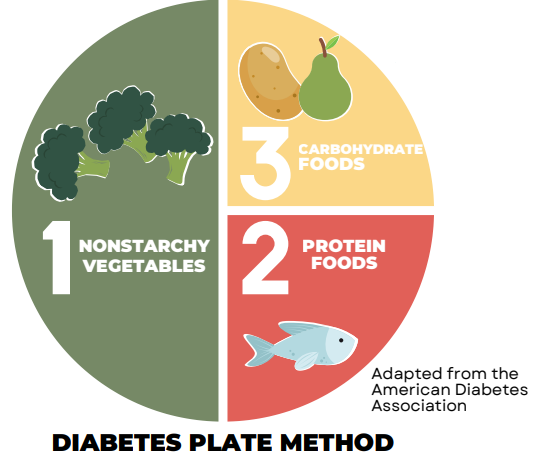
Managing blood sugar is important to living well with diabetes, and eating balanced meals at regular times throughout the day can help you avoid high or low blood sugar levels. The American Diabetes Association created the Diabetes Plate Method to help us picture what an ideal meal looks like for a person with diabetes. Try choosing lean (less fattening) proteins like chicken, turkey, beans, tofu, fish or eggs. Add nonstarchy vegetables like spinach, collards, kale, broccoli, carrots and cabbage. Citrus fruits, berries, nuts and seeds are packed with vitamins and make great low sugar snacks. When choosing carbohydrate foods, try swapping out white rice or bread for brown rice or whole grain bread, and consider other whole grains like oats, quinoa, and farro.
Eating healthy can get expensive! Save money on groceries by buying frozen fruit, vegetables and fish. Canned fruit typically has added sugar, so it is not the best option for people living with diabetes. Canned beans and vegetables can save lots of time in the kitchen. Remember to drain and rinse canned beans and vegetables to get rid of added salt.
To learn more about accessing healthy foods on a budget, visit Find Fresh Erie County or check out our publication “Let’s Talk About Food Access.”
Your doctor may be able to connect you with a dietitian for help developing meal plans and learning how to swap out sugary snacks.
Learn more about nutrition at from the American Diabetes Association.
Understanding Labels
Understanding the nutrition facts labels on packaged and processed food items can help you make good choices, especially when snacking. No food is a bad food, but many foods should be eaten in moderation (only sometimes). For managing diabetes, pay attention to:
- Serving size: Does not always mean the amount you should eat! This is a simple way to measure the nutrition in the amount you ate. For example, the sample nutrition facts label shows 1 1/2 cups as a serving size, so if you ate 3 cups, you know you need to double all of the information listed. There are four servings in the package, so if you ate the whole package, multiply everything by 4.
- Calories: The amount of energy in the food you ate. Ask your doctor how many calories a day are right for you.
- Total Carbohydrates: Includes information on the amount of fiber and sugar in the food you are eating. It is important for people with diabetes to eat fiber and sugars in balance. For example, whole fruit has both fiber and sugar, but in juice, the fiber (pulp) is strained out, leaving only the sugars behind. Pay close attention to total sugars and added sugars. “Added Sugars” means in addition to the sugars already naturally occurring in the main ingredients. Almost all foods have some amount of sugar. Not all foods have added sugar.
The Mind and Body Are Connected
Getting diagnosed and managing diabetes can be overwhelming, upsetting and stressful. The thoughts, feelings, beliefs and attitudes you have about your body and how well it is working for you are valid and important to acknowledge. These feelings will come and go throughout your life with diabetes. It is important to do your best to take care of your body and mind by practicing mindfulness, taking things one day at a time and making small changes, one by one. Mindfulness activities include rest, meditation, journaling, talk therapy, exercise, yoga and more.
Depression is a medical illness that causes feelings of sadness and hopelessness. Sometimes depression will cause you to lose interest in activities you used to enjoy. Depression can also cause people to lose track of managing their diabetes, increasing risk for complications and hospital visits. People with diabetes are 2 to 3 times more likely to have depression than people without diabetes. Treatment is available and is shown to help. Therapy, medicine or both can help ease the symptoms of depression and get you back on track with your diabetes management. You are not alone.
More About Mental Health
Let’s Talk About Mental Health
Mental Health Allies in Erie County
Erie County Department of Mental Health
Erie Path - a free app and web site with local and national mental health resources and information.
Be Well | NY State Department of Health Page on Mental Health and Wellness
Nami.org - find mental health care that fits your cultural background.