 Erie County Dept of Health
Health Equity exists when all people have a fair and just opportunity to be healthy, especially those who have experienced disadvantage, injustice, and other avoidable inequalities that are often associated with race, gender, ethnicity, social position, sexual orientation and disability.
What Impacts Your Health?
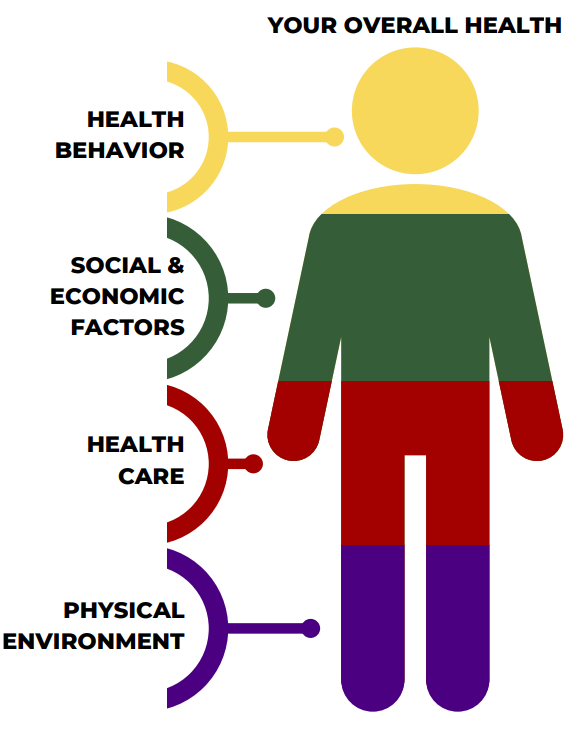
Health factors are things that can improve to help us live longer and healthier lives. They include health behaviors, health care, social and economic factors, and the physical environment.
Health behaviors include smoking, diet, exercise, substance use and sexual activity. We tend to have more control over health behaviors compared to other health factors. Making a change in health behaviors can make a big difference in our health and health outcomes. However, other factors shape our health behavior options.
The social determinants of health are factors that can influence your health and health behaviors. These factors have a big impact on health and are changed through policy, programs and power. Social and economic factors include education, employment, income, social support and community safety. Health care includes access, availability and quality of care. Physical environment includes air and water quality, housing, and transit.
All of these factors can be influenced by policies, programs and power.
Social Determinants of Health
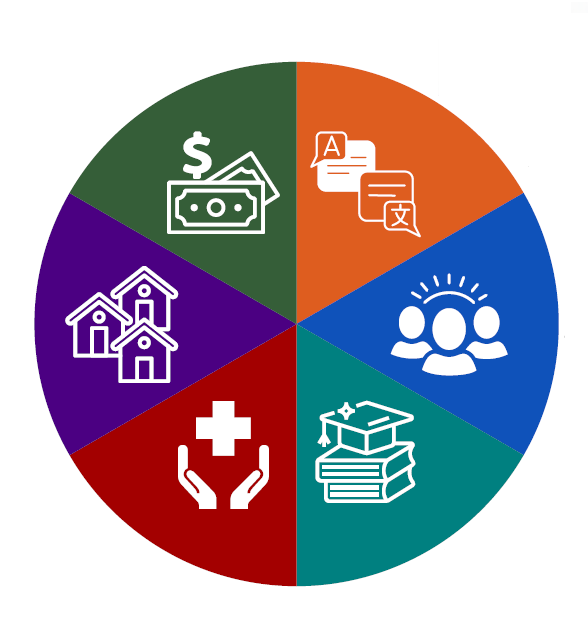
Factors that Can Influence Your Health
Adapted from New York State Department of Health, "The 6 Domains of Social Determinants of Health."
What is Health Equity?
Equity and Equality
To understand health equity, we must also understand the key differences between equity and equality. The Robert Wood Johnson Foundation offers the images below to help us describe the main differences. Equality is offering the same support to every person. Equity is offering the type and amount of support that meets a person where they are at.
Health Outcomes
Improving health outcomes is a big part of health equity. Health outcomes measure how health interventions like screening and education change the level of health of a person or community. Health outcomes for a person can reflect good health—like staying out of the hospital or not experiencing any physical pain—or they can reflect poor health—like becoming sick with an illness or dying young. The length of your life and the quality of your life are key health outcomes. Health outcomes are connected to health factors like the Social Determinants of Health.
Types of Health Interventions:
- Outreach - sharing information with the people that need it most
- Screening - testing people for disease
- Epidemiology and Surveillance - studying how many and what types of people live with disease and how disease spreads in a community
- Health Education - teaching the public about diseases and how to stay healthy
- Social Marketing - promoting practices that prevent disease
- Policy Development - changing the way we support disease prevention in communities
Health Equity Exists When:
“Health Equity exists when all people have a fair and just opportunity to be healthy, especially those who have experienced socioeconomic disadvantages, historical injustices, and other avoidable systemic inequalities that are often associated with social categories of race, gender, ethnicity, social position, sexual orientation, and disability.” -Kelly Marie Wofford, Director of the Erie County Office of Health Equity
Everyone in Erie County deserves to live in communities that are built to help them be healthy. This means homes, workplaces, schools, neighborhoods and the environment should be safe and free from harmful conditions. Laws, policies and ways of treating people can create harmful conditions that can lead to poor health.
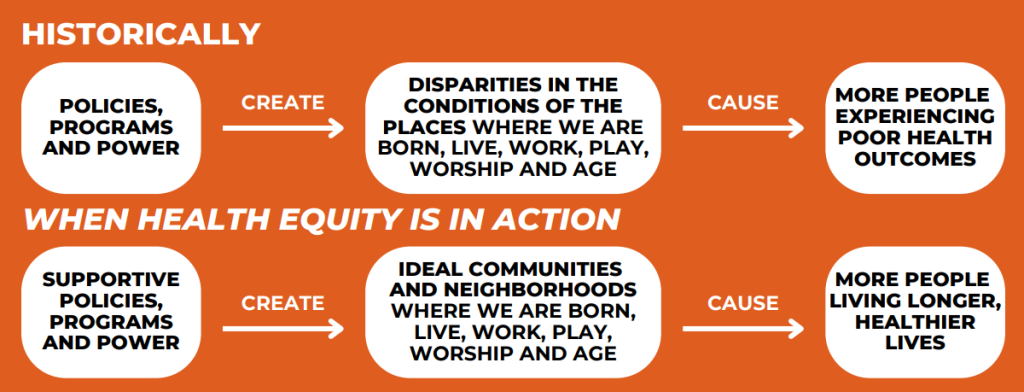
For example, when health equity is in action, our local food system has policies and programs that meet people where they are at. These supports include an active food policy council, development incentives for local grocery stores, medically tailored meals at health care providers, distribution networks for small farmers, neighborhood-based food distribution, healthy emergency food, culturally-appropriate foods, healthy and free school meals, community garden protections, increased SNAP funding, and more. These policies and programs support and strengthen ideal communities where people have access to the foods they want and need to live longer, healthier lives.
What Are Root Causes?
"When a flower doesn’t bloom, you fix the environment in which it grows, not the flower.” -Alexander den Heijer
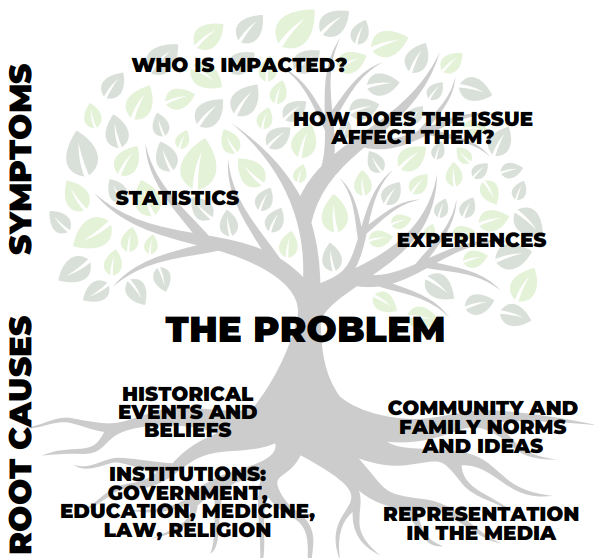
Root causes are the reasons behind a problem or issue we see in our community. Societies often create policies and rules that mean well but do not address the reasons a particular issue exists.
For example, we need to find solutions that address the symptoms of heart disease and also figure out why people are developing heart disease to begin with. People may develop heart disease because of many factors, including stress level, diet, physical activity level and genetics. However, there are often root causes behind why some people may be more likely to develop heart disease. For example, someone’s diet may put them at increased risk of heart disease because they are not able to afford to buy fresh fruits and vegetables or live in a neighborhood that does not have a grocery store.
To reduce the number of people who have heart disease in a community, we have to address the reasons people are living with heart disease, the root causes of those reasons and the symptoms of heart disease people experience. It takes all of us working together to change health outcomes like heart disease.
What Are Health Disparities?
Health disparities are preventable differences in how many people get sick and how bad the sickness is if they get the illness. Health disparities can be found across ZIP codes, race and ethnicity, age, sexual orientation, social and economic status, education level, and more.
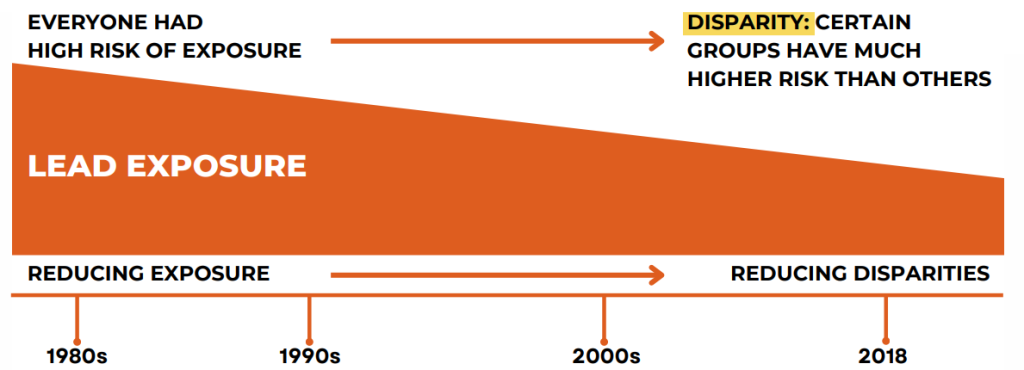
Policies and programs can help to reduce health disparities. For example, when lead exposure was found to cause harmful health problems in children and adults, policies were introduced to reduce exposure to lead. As these policies and programs increased and strengthened over time, the number of people getting sick from lead poisoning went down. In Erie County, we have many programs to support people who have been exposed to lead. We also have many health interventions that work to reduce lead exposure in our County.
Today, illnesses from lead poisoning are an example of health disparity because people who live in newer homes or can afford to remove lead from their home rarely get sick. There is a large group of people that do not have to worry about lead exposure. On the other hand, people living in older homes and those who cannot afford to remove the lead get sick much more often. This group of people includes anyone living in a home built before 1978, or almost all City of Buffalo residents. Children under age 6, pregnant people, and immigrants and refugees are at higher risk than any other group. This complex problem requires effective housing code enforcement, public health interventions, school district support, informed pediatricians and community leaders, and more to reduce lead exposure for the groups experiencing the highest risk.
Reducing Exposure, Reducing Disparities
- 1980s: Federal law limits lead in gasoline
- 1990s: Leaded gasoline banned & new federal law requires property owners to share information about known lead paint hazards with renters and buyers
- 2000s: Federal dollars fund county lead poisoning prevention programs to support families dealing with lead exposure risk in their homes
- 2018: Erie County Lead Safe Task Force formed to strengthen lead poisoning prevention programs
The Erie County Health Equity Act of 2021
The Erie County Health Equity Act of 2021 established the Erie County Office of Health Equity with the goal of supporting, educating and planning for improved health outcomes for people from disadvantaged backgrounds, including but not limited to, racial and ethnic minorities, as well as people from rural areas. The role of the Office of Health Equity is to:
- Analyze disparities in health among disadvantaged and marginalized Erie County residents.
- Understand and connect factors that contribute to health outcomes including the physical environment, the social determinants of health, access to clinical care and health behaviors.
- Make recommendations for improving health services for disadvantaged and marginalized Erie County residents
- Pilot models and programs to improve health disparities
- Promote public awareness and coordinate educational events that support healthy lifestyles in disadvantaged and marginalized communities and groups
- Publish reports describing health disparities among racial and sexual minority populations in Erie County Collaborate with other sectors and institutions focused on health disparities.
- Collaborate with other sectors and institutions focused on health disparities.
What Can I Do?
Most people agree that creating healthy communities for everyone is a difficult problem to solve. When you look at all the things that need to be fixed or created, the goal of health equity may seem impossible. However, if we all take responsibility of a small piece of the solution, it becomes much easier to reach the goal of healthy communities for all Erie County residents. Learn how you can take action.
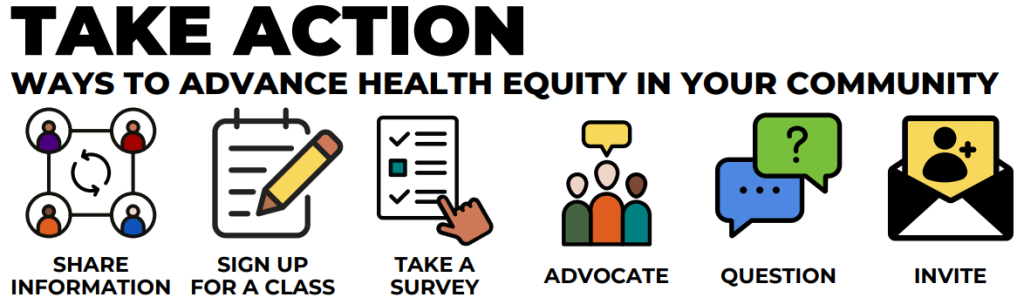
You can support health equity in your community with a few simple actions.
- Share information about health equity with your colleagues, friends and neighbors. This publication is a great place to start.
- Sign up for a training that increases your knowledge of equity or supports the reduction of a health disparity.
- Participate in health and community surveys. It is important for survey responses to reflect the diversity of our county.
- Advocate for others. In the workplace, you could do something like ask your employer to update their gender identity policies.
- Question policies and programs that exclude groups or fail to represent everyone’s needs.
- If you are in a position of power, invite more groups to the table. Health equity takes all of us working together.